Electrical problems happen in every home. A tripped breaker, a faulty outlet, or a flickering light — these issues are common. Some of them are easy to fix on your own. However, doing the job safely and correctly depends on one thing: having the right tools.
Many homeowners make the mistake of grabbing whatever is nearby when something goes wrong. That approach can be dangerous. Electrical work requires specific tools designed for the task. The good news is that you do not need a professional-grade setup to handle basic repairs. You just need the right ones for the job.
This article will help you understand what tools matter most, what to look for when buying them, and how to build a reliable kit that keeps you safe and prepared.
Why Your Tools Matter More Than You Think
Using the wrong tool on an electrical job is not just inconvenient. It can be genuinely hazardous. Damaged wiring, short circuits, and even electrical fires can result from poor technique or inadequate equipment.
Therefore, investing in proper tools is not just about convenience. It is about protection — for you, your family, and your home. A good set of home maintenance tools saves you time, reduces mistakes, and gives you the confidence to handle repairs without calling a professional every single time.
Additionally, quality tools last longer. Buying cheap equipment might save money upfront, but worn-out or inaccurate tools can cause more problems than they solve.
Start With Safety: Non-Negotiable Gear
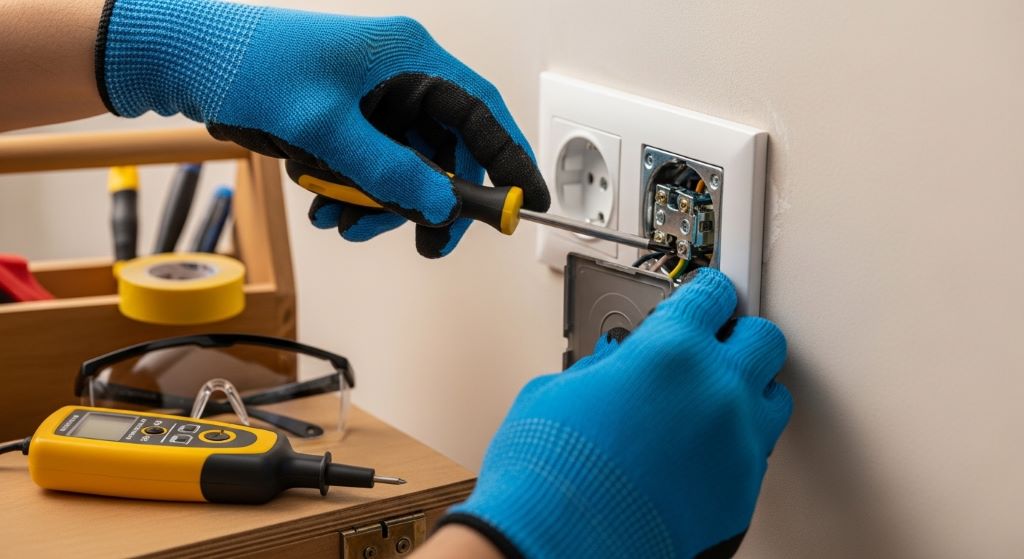
Before anything else, safety equipment must be your first purchase. Electrical work carries real risks. Even low-voltage tasks can cause injury if not approached carefully.
Here is what you need before touching any wiring:
- Insulated gloves rated for electrical work
- Safety glasses to protect against sparks or debris
- Non-contact voltage tester to check if a wire is live
- A rubber-soled mat if you are working in a potentially damp area
The non-contact voltage tester is especially important. It detects the presence of electricity without you touching anything. Simply hold it near a wire or outlet, and it lights up or beeps if current is present. This single tool can prevent serious injury and should be in every electrical repair kit.
Essential Hand Tools for Electrical Repairs
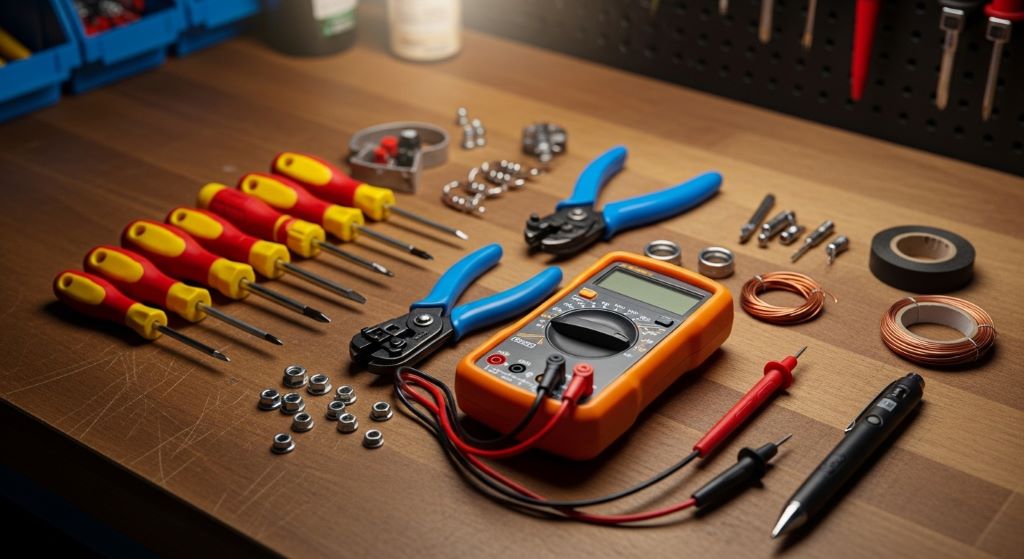
Once you have your safety gear sorted, the next step is building your hand tool collection. These are the items you will reach for most often.
Screwdrivers
You will need both flathead and Phillips screwdrivers in multiple sizes. Outlet covers, switch plates, panel covers, and fixture brackets all use screws. Look for screwdrivers with insulated handles rated to at least 1,000 volts. This rating means the handle will not conduct electricity if you accidentally touch a live component.
A set with interchangeable bits is practical. However, for electrical work specifically, fixed-handle screwdrivers with thick insulation are a safer and more reliable option.
Needle-Nose Pliers
These are used to bend, grip, and position wires in tight spaces. Electrical boxes are often cramped, and needle-nose pliers let you work precisely without forcing anything. Again, look for insulated handles.
Wire Strippers
Wire strippers remove the plastic coating from the end of electrical wires so they can be connected properly. A good wire stripper is designed to cut cleanly through the insulation without nicking the copper wire underneath. Damaged copper can lead to poor connections and future problems.
Look for a model with clearly labeled gauge markings. This ensures you are using the right slot for each wire size, which keeps your connections clean and safe.
Utility Knife
A sharp utility knife helps with cutting cable sheathing, trimming insulation, and general prep work. Choose one with a comfortable grip and replaceable blades. Dull blades require more force, which increases the risk of slipping.
Measuring and Testing Tools
Knowing what is happening inside your wiring is just as important as being able to work on it. Measuring and testing tools give you that knowledge.
Multimeter
A multimeter is one of the most valuable tools in any electrical repair kit. It measures voltage, current, and resistance. With a multimeter, you can check whether an outlet is delivering the correct voltage, test whether a circuit is complete, or identify a fault in a wire.
Entry-level digital multimeters are affordable and accurate enough for home use. You do not need a professional-grade model. However, make sure the one you choose has clearly labeled functions and a display that is easy to read in low-light conditions.
Circuit Breaker Finder
This tool helps you identify which breaker in your panel controls a specific outlet or circuit. It works in two parts: a transmitter that plugs into an outlet and a receiver that you run along the breaker panel. When the receiver beeps near the correct breaker, you know it is safe to switch it off before starting work.
This is a huge time-saver. Without it, you either have to guess or turn off every breaker one by one. For anyone doing regular electrical maintenance, a circuit breaker finder is worth every cent.
GFCI Outlet Tester
Ground fault circuit interrupter outlets are the ones with the small reset buttons, typically found in bathrooms and kitchens. A GFCI tester plugs directly into the outlet and tells you immediately whether it is wired correctly. It also lets you test the safety shutoff function without any guesswork.
These testers are inexpensive and incredibly useful. If you are ever troubleshooting outlets in moisture-prone areas, this tool removes the uncertainty.
Wire and Connection Supplies
Tools alone are not enough. You also need the right supplies on hand to complete repairs properly.
Electrical Tape
High-quality electrical tape insulates wire connections and protects exposed copper. Not all tape is the same. Look for tape rated for electrical use, with good adhesion and flexibility. Cheap tape can dry out, crack, and lose its grip over time.
Wire Nuts and Connectors
Wire nuts twist onto the ends of joined wires and hold them securely together. They come in different sizes for different wire gauges. Having an assortment on hand means you are always ready for whatever a repair requires.
Additionally, push-in connectors have become popular for their speed and ease of use. They do not require twisting — you simply push the wire in and it locks. However, wire nuts remain the standard choice for most home repairs because of their reliability.
Fish Tape
If you ever need to run new wire through a wall or conduit, fish tape is essential. It is a long, flexible metal or fiberglass ribbon that you thread through tight spaces to pull wire into position. For simple repairs, you may not need it right away. However, it is a valuable addition as your skills grow.
Power Tools That Make the Job Easier
For most basic electrical repairs, hand tools are all you need. However, a few power tools can make certain tasks much faster.
Cordless Drill
A cordless drill speeds up the process of mounting electrical boxes, running screws into drywall, and drilling holes for wire passage. Look for one with variable speed settings and a clutch. This helps prevent over-driving screws into delicate components.
Lithium-ion batteries are the current standard. They hold a charge longer, weigh less, and perform better in cold conditions compared to older battery types.
Oscillating Multi-Tool
An oscillating tool is excellent for cutting small openings in drywall when you need to access wiring or install a new outlet box. It offers precision that a saw cannot match in tight spaces. Therefore, for renovation-style repairs or upgrades, this tool earns its place in the kit.
How to Choose Quality Tools Without Overspending
You do not need to spend a fortune to build a reliable set of home maintenance tools. Here is how to make smart purchasing decisions.
Focus on quality for the tools you use most. Screwdrivers, pliers, and wire strippers are everyday items. Spend a little more on these. For tools you will use occasionally, like a circuit breaker finder or fish tape, mid-range options work perfectly well.
Buy insulated tools with certification labels. In many countries, insulated hand tools carry a VDE or GS certification mark. These indicate that the tools have been independently tested for safety. Always look for these markings when shopping for electrical tools.
Avoid tools with cracked, peeling, or thin insulation. Even a small gap in the coating can expose you to current. Inspect your tools regularly and replace any that show signs of wear.
Consider starter kits for value. Many brands sell bundled tool sets that cover the basics at a lower combined price than buying each item separately. This is a practical way to start, especially if you are new to DIY electrical work.
Organizing and Storing Your Tools
A good tool setup is only useful if you can find what you need quickly. Organization matters, especially in an emergency.
Use a dedicated toolbox or bag for your electrical tools. Keeping them separate from general tools means you can grab everything you need in one go. Label compartments if possible, and always return tools to the same spot after use.
Additionally, store your tools in a dry environment. Moisture is the enemy of metal tools and can degrade insulation over time. A cool, dry space like a garage shelf or a dedicated cabinet works well.
Check your tools regularly for damage. A cracked handle or worn blade can turn a routine job into a dangerous one. Make it a habit to inspect before each use.
When to Call a Professional
Even with the best tools and preparation, some jobs are beyond the scope of DIY repairs. Knowing when to stop and call a licensed electrician is just as important as knowing how to use your tools.
You should call a professional when the problem involves your main electrical panel, when you are dealing with aluminum wiring, when you are unsure about permits or local electrical codes, or when the repair involves rewiring large sections of your home.
Electrical safety codes exist for a reason. Violating them, even accidentally, can create hidden hazards and cause problems when you sell your home. Therefore, let the professionals handle anything beyond your current skill level.
Conclusion
Choosing the right tools for home electrical repairs is about safety, accuracy, and preparedness. Start with your safety gear. Then build your hand tool collection with insulated screwdrivers, pliers, and wire strippers. Add measuring tools like a multimeter and a circuit breaker finder to help you understand what is happening in your circuits. Stock essential supplies such as electrical tape, wire nuts, and connectors so you are always ready to complete a repair properly.
A well-chosen electrical repair kit does not need to be large or expensive. It just needs to cover the basics reliably. With the right tools in hand, most common household electrical issues become manageable. You save money, gain confidence, and keep your home running safely.
However, always know your limits. No tool can replace the judgment and expertise of a qualified electrician when the job calls for one.
Frequently Asked Questions
What is the most important tool for a beginner’s electrical repair kit?
A non-contact voltage tester is the single most important tool for any beginner. It tells you whether a wire or outlet is live before you touch it, which is the foundation of safe electrical work.
Can I use regular tools for electrical repairs, or do I need special ones?
You should always use tools specifically designed for electrical work. Regular hand tools lack the insulated handles needed to protect you from electrical current. Always look for tools rated to at least 1,000 volts.
How do I know which wire gauge my wire stripper should handle?
Check the wire gauge printed on your cable sheathing. Standard home wiring in most countries uses 12 or 14 AWG wire for outlets and circuits. Choose a wire stripper that clearly labels these sizes on its cutting slots.
Is a multimeter necessary for basic home electrical repairs?
For simple tasks like replacing an outlet or switch, a non-contact tester is often enough. However, a multimeter becomes essential for diagnosing problems, testing circuit continuity, and confirming voltage readings. It is a worthwhile addition to any home maintenance tools collection.
How often should I replace the tools in my electrical kit?
There is no fixed schedule, but inspect your tools before every use. Replace any tool with cracked insulation, worn tips, bent jaws, or other visible damage immediately. Well-maintained quality tools can last many years without needing replacement.
Related Topics:
How to Clean a Car Interior: Essential Cleaning Kit Guide
Why Is There Pollen on My Car? Causes, Effects, and Easy Cleaning Tips