Car battery maintenance may seem complex at first. However, with the right tools and simple steps, anyone can do it at home. A well-maintained battery improves performance, prevents breakdowns, and saves money. Therefore, learning basic battery care is a smart move for every car owner.
In this guide, you will learn how to use basic tools safely and effectively. Additionally, you will understand how to extend your battery life with easy maintenance habits.
Why Car Battery Maintenance Matters
A car battery is the heart of your vehicle’s electrical system. It powers the engine start and supports all electronic components.
However, many drivers ignore battery care until problems arise. This often leads to sudden failure. Therefore, regular maintenance helps you:
- Avoid unexpected breakdowns
- Extend battery lifespan
- Improve vehicle performance
- Save repair costs
Additionally, proper maintenance ensures safety while driving.
Essential Tools for Car Battery Maintenance
Before you begin, you need a few basic tools. Fortunately, most of them are affordable and easy to use.
Basic Tools You Will Need
- Safety gloves and goggles
- Adjustable wrench or spanner
- Battery terminal cleaner or brush
- Multimeter
- Baking soda and water solution
- Clean cloth or rag
- Battery charger (optional)
Additionally, keep a small toolkit handy for convenience.
Safety First: Precautions Before You Start
Before working on your battery, safety should always come first. Car batteries contain acid and can produce sparks.
Therefore, follow these precautions:
- Turn off the engine completely
- Remove the key from ignition
- Wear gloves and eye protection
- Work in a well-ventilated area
- Avoid smoking or open flames nearby
Additionally, always disconnect the negative terminal first to prevent short circuits.
Understanding Your Car Battery
Before using tools, it is important to understand the basic parts of a battery.
Key Components
- Terminals: Positive (+) and negative (-) connections
- Electrolyte: Liquid inside the battery
- Battery case: Outer protective shell
Additionally, some modern batteries are sealed, meaning they require less maintenance.
Step-by-Step Guide to Car Battery Maintenance
Now, let’s go through the complete process step by step.
Inspect the Battery Condition
Start with a visual inspection. This step helps you identify early issues.
Look for:
- Corrosion on terminals
- Cracks or leaks
- Loose connections
If you notice damage, replace the battery immediately. However, minor corrosion can be cleaned easily.
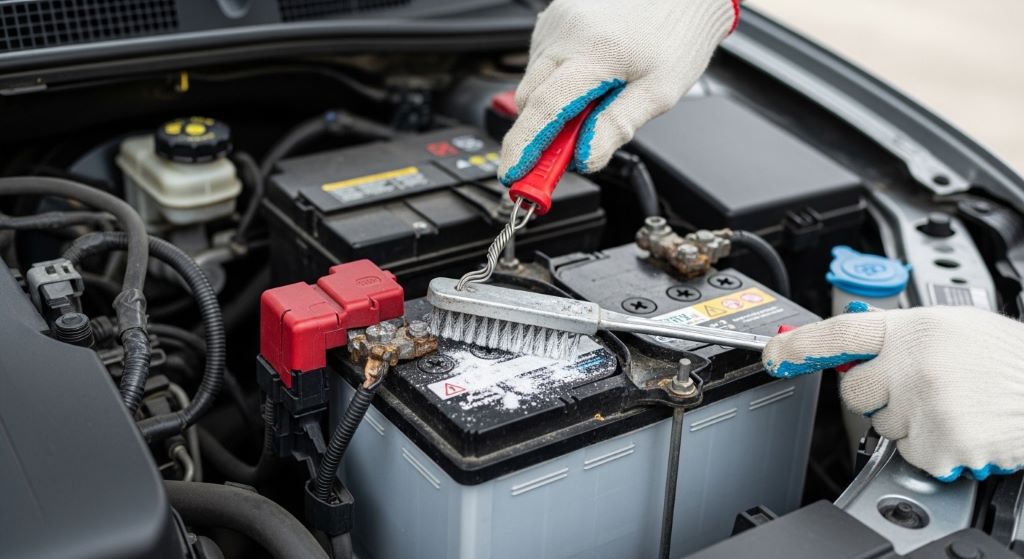
Clean the Battery Terminals
Corrosion is a common issue. It appears as a white or blue powder on terminals.
How to Clean Terminals
- Disconnect the battery (negative first, then positive)
- Mix baking soda with water
- Apply the solution to terminals
- Use a brush to scrub gently
- Wipe with a clean cloth
Additionally, ensure the terminals are completely dry before reconnecting.
Tighten Battery Connections
Loose connections can cause starting problems.
Use a wrench to tighten the terminals securely. However, avoid over-tightening, as it may damage the battery posts.
Additionally, ensure cables are properly aligned.
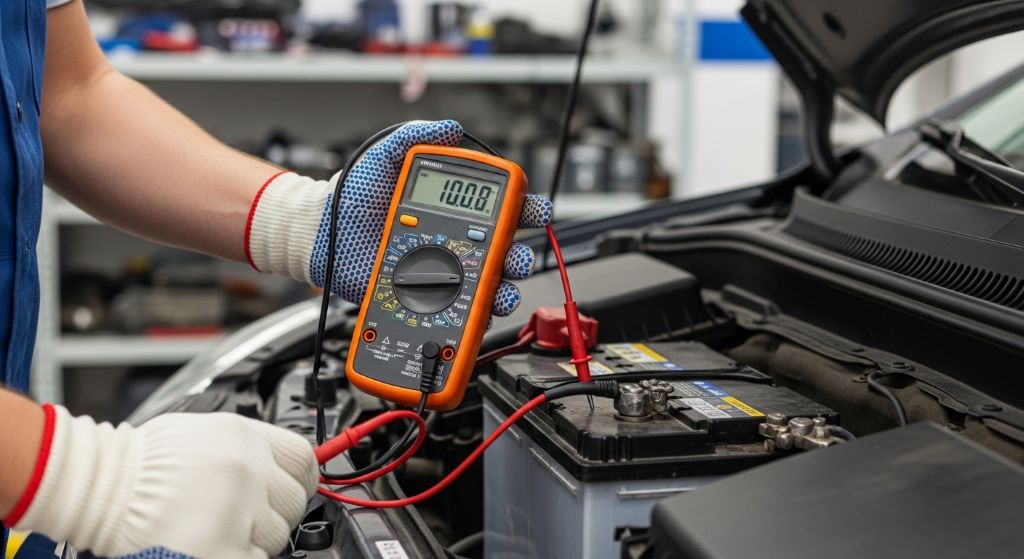
Check Battery Voltage with a Multimeter
A multimeter helps you measure battery health.
Steps to Use a Multimeter
- Set the multimeter to DC voltage
- Connect red probe to positive terminal
- Connect black probe to negative terminal
Voltage Reading Guide
- 6V or above: Fully charged
- 4V: Partially charged
- Below 12.0V: Needs charging
Therefore, regular checks help you avoid unexpected failures.
Recharge the Battery if Needed
If voltage is low, use a battery charger.
How to Charge Safely
- Connect charger clamps correctly
- Set appropriate voltage
- Charge in a ventilated area
Additionally, avoid overcharging, as it can damage the battery.
Check Electrolyte Levels (For Non-Sealed Batteries)
Some batteries allow you to check fluid levels.
If levels are low:
- Add distilled water only
- Do not overfill
However, sealed batteries do not require this step.
Common Car Battery Problems and Solutions
Even with care, problems can occur. Therefore, knowing how to fix them is useful.
Battery Not Holding Charge
This may happen due to age or internal damage. In such cases, replacement is often the best option.
Corrosion Build-Up
Regular cleaning prevents corrosion. Additionally, applying petroleum jelly on terminals can reduce buildup.
Slow Engine Crank
This usually indicates a weak battery. Therefore, check voltage and recharge if needed.
Battery Warning Light
If the warning light appears, it may not always be the battery. It could be the alternator. Therefore, further inspection is required.
Tips to Extend Car Battery Life
Proper habits can significantly increase battery lifespan.
Simple Maintenance Tips
- Drive regularly to keep battery charged
- Turn off lights when engine is off
- Avoid short trips frequently
- Clean terminals periodically
- Check voltage every month
Additionally, parking in shade helps prevent overheating.
Seasonal Battery Care
Weather affects battery performance. Therefore, adjust your maintenance routine based on seasons.
Summer Care
- Heat can evaporate battery fluid
- Check electrolyte levels regularly
Winter Care
- Cold reduces battery efficiency
- Keep battery fully charged
Additionally, inspect before long trips during extreme weather.
When to Replace Your Car Battery
No battery lasts forever. Typically, a car battery lasts 3 to 5 years.
Signs You Need Replacement
- Frequent jump-starts
- Dim headlights
- Slow engine start
- Swollen battery case
Therefore, timely replacement prevents sudden breakdowns.
Benefits of DIY Battery Maintenance
Maintaining your battery at home has several advantages.
- Saves money on service costs
- Builds basic car care skills
- Reduces dependency on mechanics
- Improves vehicle reliability
Additionally, it gives you confidence in handling minor car issues.
Mistakes to Avoid During Maintenance
Even simple tasks can go wrong if not done carefully.
Common Mistakes
- Connecting terminals incorrectly
- Ignoring safety gear
- Using tap water instead of distilled water
- Overcharging the battery
Therefore, always follow proper steps.
Conclusion
Car battery maintenance does not require expert skills. With basic tools and simple steps, you can keep your battery in excellent condition at home.
Start with regular inspections. Then clean terminals and check voltage. Additionally, recharge when needed and follow safety precautions.
By doing this, you extend battery life, improve performance, and avoid costly repairs. Therefore, make battery care a regular part of your car maintenance routine.
FAQs
1. How often should I check my car battery?
You should check your battery at least once a month. Additionally, inspect before long trips.
2. Can I clean battery terminals without removing the battery?
It is safer to disconnect the battery before cleaning. This prevents accidental shocks.
3. What voltage indicates a bad battery?
A reading below 12.0 volts usually indicates a weak or failing battery.
4. Is it safe to charge a car battery at home?
Yes, it is safe if you follow proper instructions and use a suitable charger.
5. How long does a car battery last?
Most batteries last between 3 to 5 years, depending on usage and maintenance.
Related Topics:
Are Fender Flares Bad For Your Truck?
The best all season tires for all seasons