Why Your Steering Feels Loose After Long Drives
You just finished a long road trip. You pull into your driveway, but something feels off. The steering wheel seems to float a little. It responds slower than usual. You need a bit more effort to keep the car going straight.
This is a common problem many drivers face. However, most people ignore it. They assume it is just fatigue or the road surface. That assumption can be costly and dangerous.
Loose steering after long drives is often a sign of wear in your suspension or steering system. The good news is that most causes are diagnosable and fixable. This guide walks you through everything you need to know.
Understanding the Suspension and Steering System
Before diving into repairs, it helps to understand how these systems work together. Your steering system connects the steering wheel to the front wheels. Your suspension system supports the vehicle’s weight and absorbs road shocks.
These two systems work as a team. When one has a problem, the other often suffers as well. Therefore, a problem in your tie rods can affect how your whole front end feels. A worn shock absorber can make the steering seem vague and drifty.
The main components involved include:
- Tie rod ends (inner and outer)
- Ball joints
- Steering rack or steering box
- Control arm bushings
- Sway bar links and bushings
- Power steering pump or electric steering motor
- Wheel bearings
Each of these parts plays a specific role. Any one of them can cause loose or imprecise steering when it wears out.
Common Causes of Loose Steering After Long Drives
Heat plays a big role here. Components expand as they warm up during extended driving. Worn parts that feel acceptable when cold often show their weaknesses after an hour on the highway. Additionally, long drives stress components that are already near the end of their life.
Here are the most common causes:
Worn Tie Rod Ends
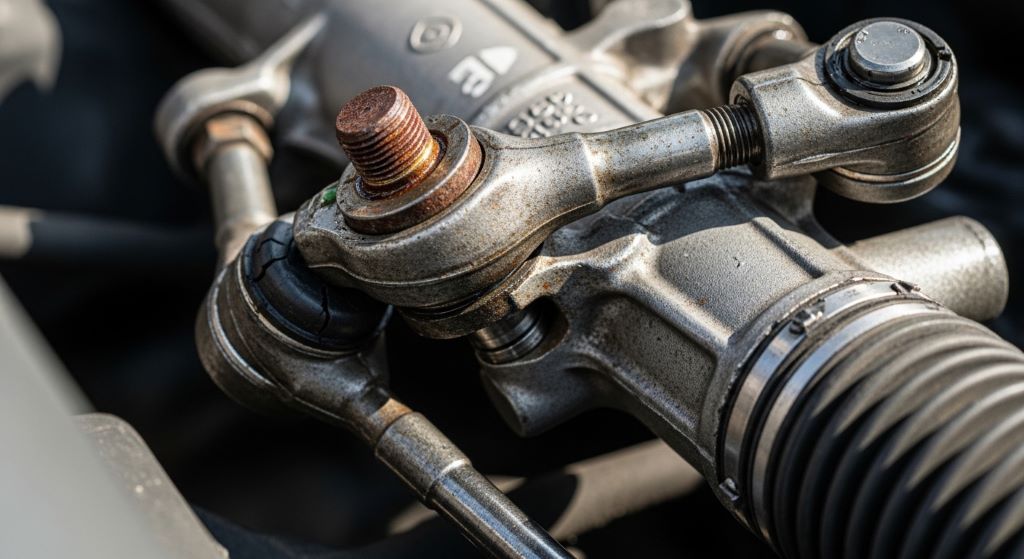
Tie rod ends connect the steering rack to the wheel hub. They allow the wheels to turn left and right. When they wear out, you get play in the steering. The car may also pull to one side. Replacing tie rod ends is one of the most common suspension and steering repairs a mechanic performs.
Loose or Worn Ball Joints
Ball joints connect the control arms to the wheel hub. They allow for up-and-down and side-to-side movement. A worn ball joint creates a knocking noise and vague steering. In severe cases, a failed ball joint can cause a wheel to collapse inward. This makes it one of the most dangerous worn parts on a vehicle.
Degraded Steering Rack
The steering rack translates the rotation of your steering wheel into left-right movement of the wheels. Over time, the internal seals and rack teeth wear down. This leads to play in the center of the steering wheel. You may notice the car wanders on highways even when you hold the wheel straight.
Worn Control Arm Bushings
Control arm bushings are rubber components that cushion the connection between the control arm and the vehicle frame. Heat breaks down rubber over time. Therefore, after long drives, these bushings can feel soft and imprecise. Replacement is usually affordable and straightforward.
Faulty Wheel Bearings
A worn wheel bearing allows the wheel to wobble slightly on its axis. At highway speeds, this creates a humming noise that changes pitch with speed. It also contributes to loose or drifting steering. If you notice a low grinding sound that shifts when you change lanes, a wheel bearing is likely the culprit.
How to Diagnose the Problem at Home
You do not always need a mechanic to find the source of the problem. There are several simple checks you can do yourself.
The Steering Wheel Play Test
Park your car on level ground. With the engine off, gently rock the steering wheel left and right without moving the front wheels. More than about an inch of play before the wheels respond is a warning sign. However, some vehicles allow a small amount of play by design, so check your owner’s manual for acceptable ranges.
The Jack-and-Shake Test
Safely lift the front of your vehicle with a floor jack and support it on jack stands. Grab the tire at the 9 o’clock and 3 o’clock positions and try to shake it. Any movement here points to worn tie rod ends or a faulty steering rack. Then grab it at the 12 o’clock and 6 o’clock positions. Movement here suggests worn ball joints or wheel bearings.
Visual Inspection
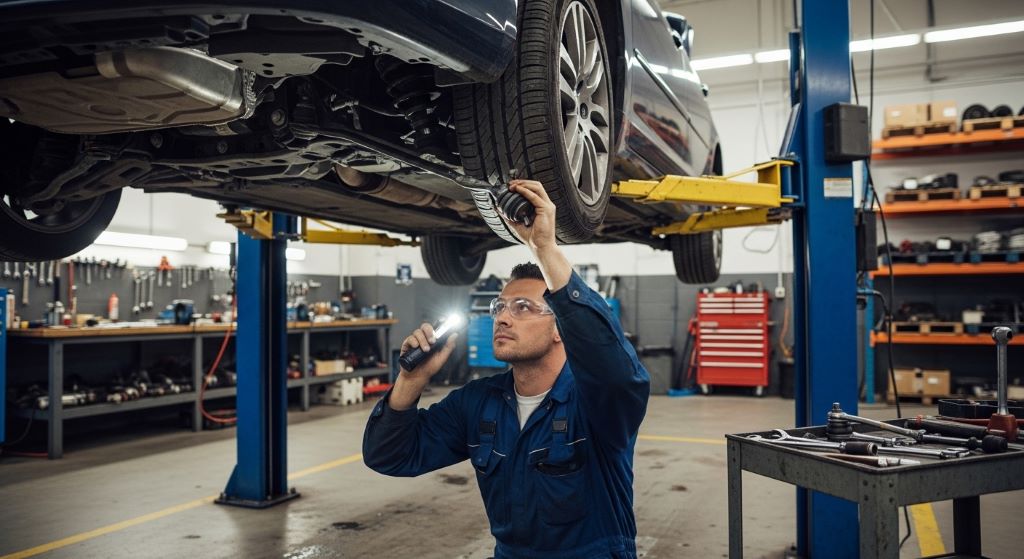
Look at the rubber boots covering the tie rod ends and CV joints. Tears or cracks allow dirt and moisture inside, which accelerates wear. Also look for grease leaks around the steering rack. A leaking rack often causes steering inconsistency, especially after the fluid warms up on long drives.
Listen for Noises
Clunking over bumps often points to ball joints, sway bar links, or control arm bushings. A grinding or humming noise that changes with speed usually means a wheel bearing. Squealing during low-speed turns can point to a dry or worn steering component.
When to Attempt DIY Repairs vs. Calling a Professional
Some repairs are well within the ability of a home mechanic. Others require specialized tools or alignment equipment. Here is a simple breakdown.
DIY-friendly repairs include sway bar link replacement, outer tie rod end replacement (in some vehicles), and control arm bushing replacement with a press tool. These parts are usually affordable and accessible.
However, inner tie rod replacement, steering rack replacement, and ball joint replacement often require professional tools and skills. Additionally, any time you replace a steering or suspension component that affects wheel angle, you must get a wheel alignment afterward. Skipping alignment causes uneven tire wear and can make the loose feeling worse.
Step-by-Step: Replacing Outer Tie Rod Ends
This is one of the most common and manageable suspension and steering repairs for home mechanics. Here is how to approach it.
First, loosen the lug nuts while the car is on the ground. Then safely lift and support the vehicle. Remove the wheel. Count and record the number of turns as you unscrew the old tie rod end from the inner tie rod. This helps preserve the alignment setting temporarily. Use a tie rod separator tool or a ball joint fork to separate the tapered stud from the steering knuckle.
Thread the new tie rod end on by the same number of turns you recorded. Torque the castle nut to the manufacturer specification and install a new cotter pin. Reinstall the wheel and lower the vehicle. Book a wheel alignment as soon as possible. Never skip this step.
The Role of Fluid in Steering Performance
If your car has hydraulic power steering, fluid condition matters greatly. Old or low fluid creates resistance and inconsistency. After long drives, the fluid heats up and thins out. Worn fluid loses its protective properties faster under heat.
Therefore, check your power steering fluid regularly. If it looks dark brown or smells burnt, flush and replace it. Also check for leaks around the pump and hose connections. A slow leak can cause intermittent looseness that worsens over time.
Electric power steering systems do not use fluid. However, they have sensors and motors that can wear or develop faults. If your electric steering feels loose or makes a whining sound, a diagnostic scan can identify the fault code.
Preventing Loose Steering in the Future
Prevention is always cheaper than repair. A few simple habits can extend the life of your steering and suspension components significantly.
Have your front end inspected at every tire rotation, roughly every 5,000 to 7,500 miles. Ask the mechanic to check all tie rod ends, ball joints, and bushings for play or wear. Additionally, avoid driving through deep potholes at high speed. Each hard impact places enormous stress on ball joints and control arm bushings.
Rotate your tires regularly. Uneven tire wear puts extra load on suspension components and changes the way your car steers. Keep your tires properly inflated as well. Under-inflated tires make steering feel vague even on a perfectly healthy system.
Conclusion
Loose steering after long drives is not something to ignore. It often signals wear in tie rod ends, ball joints, control arm bushings, wheel bearings, or the steering rack itself. Heat and extended use expose weaknesses that might not appear during short daily drives.
The key steps are to diagnose the issue carefully using simple tests, address the worn components promptly, and always follow up with a wheel alignment after any steering or suspension repair. Some jobs suit a confident home mechanic, while others require professional tools and expertise.
Staying proactive with inspections and fluid maintenance keeps your steering sharp and your drives safe. Catching a worn tie rod end early costs a fraction of what a failed component can lead to on the road.
Frequently Asked Questions
Why does my steering feel loose only after driving for a long time?
Heat causes worn components to expand and lose their grip. Parts that feel tight when cold often show play after an hour of driving. This is especially common with tie rod ends, ball joints, and control arm bushings.
Is it safe to drive with loose steering?
It depends on the severity. Minor looseness from worn bushings may be manageable short-term. However, a loose ball joint or severely worn tie rod end is a safety hazard. Have it inspected immediately if the steering feels noticeably imprecise or wandering.
How much does it cost to fix loose steering?
Costs vary widely. Replacing a sway bar link may cost $50 to $150. Replacing both outer tie rod ends with alignment typically runs $150 to $350. A full steering rack replacement can cost $500 to $1,500 depending on the vehicle.
Can a wheel alignment fix loose steering?
Alignment corrects the angle of the wheels but does not repair worn components. If the looseness comes from mechanical wear, alignment alone will not solve it. However, alignment is always necessary after replacing steering or suspension parts.
How often should I inspect my suspension and steering system?
A basic inspection at every tire rotation is a good habit. A more thorough check is recommended every 30,000 miles or if you notice any unusual noises, pulling, or changes in steering feel.
Related Topics:
How to Handle Burning Smell from Car After Engine Overheating
How to Replace a Kingpin on a Semi-Truck: A Step-by-Step Journey