A malfunctioning heater core creates miserable winter driving conditions. When your car’s heating system fails to warm the cabin, a flow blockage often causes the problem. Understanding how to diagnose and troubleshoot heater core blockages saves money and restores comfort quickly.
This comprehensive guide walks through systematic troubleshooting steps for identifying and resolving heater core flow restrictions. DIY mechanics and car owners can follow these procedures to diagnose heating problems accurately.
Understanding Heater Core Function and Flow
The heater core operates like a miniature radiator inside your dashboard. Hot engine coolant flows through small tubes within the core. The blower fan pushes air across these heated tubes, warming your vehicle’s interior.
Coolant enters the heater core through an inlet hose and exits through an outlet hose. Continuous circulation maintains consistent heating performance. However, restrictions anywhere in this loop reduce heat output dramatically.
Several components control coolant flow to the heater core. The thermostat regulates overall coolant temperature and circulation. Heater control valves on some vehicles open and close to control heat intensity. Additionally, blend doors direct airflow across the core or bypass it entirely.
Flow blockages develop from sediment buildup, corrosion, or stop-leak products solidifying inside passages. These obstructions restrict hot coolant from reaching the heater core efficiently. Therefore, identifying blockage locations requires methodical testing.
Recognizing Heater Core Blockage Symptoms
Weak or absent cabin heat represents the primary blockage symptom. The blower fan operates normally, but air remains cool or lukewarm. Additionally, heat output may fluctuate unpredictably during driving.
Temperature differences between heater hoses indicate flow problems. One hose feels hot while the other remains cool or warm. Both hoses should reach similar temperatures when heating operates properly.
Engine overheating sometimes accompanies heater core blockages. Restricted coolant circulation creates pressure buildup in the cooling system. However, overheating also stems from other causes requiring separate diagnosis.
Sweet coolant odors inside the cabin suggest heater core leaks rather than blockages. Foggy windows and wet carpeting accompany leaking cores. These symptoms require core replacement rather than flow restoration.
Slow coolant loss without visible leaks may indicate internal restrictions. Pressure buildup can force coolant past gaskets and seals. Therefore, monitoring coolant levels helps identify developing problems.
Checking Coolant Level and Condition
Begin troubleshooting by inspecting coolant level and quality. Low coolant prevents adequate flow through the heater core. Additionally, contaminated coolant indicates system problems requiring attention.
Check coolant when the engine is completely cold to avoid burns. Remove the radiator cap slowly, watching for pressure release. The coolant should reach the full line on the overflow reservoir.
Examine coolant color and consistency carefully. Healthy coolant appears bright green, orange, pink, or yellow depending on type. Brown or rusty coolant indicates corrosion within the cooling system.
Floating debris or sediment in coolant suggests system contamination. Small particles accumulate in narrow heater core passages, creating blockages. Moreover, thick or sludgy coolant flows poorly through small tubes.
Oil contamination makes coolant appear milky or foamy. This serious condition indicates head gasket failure or engine damage. Therefore, address oil contamination before attempting heater core repairs.
Testing Heater Hose Temperatures
Temperature testing reveals whether coolant flows through the heater core properly. This simple diagnostic procedure requires only your hands and a running engine.
Start the engine and allow it to reach normal operating temperature. Turn the heater controls to maximum heat and high fan speed. Wait several minutes for the system to stabilize.
Carefully feel both heater hoses where they connect to the firewall. The inlet hose should feel very hot, nearly too hot to touch comfortably. The outlet hose should also feel hot, though slightly cooler than the inlet.
Large temperature differences indicate flow restrictions. A hot inlet hose with a cool outlet hose suggests blocked heater core passages. Conversely, both hoses remaining cool suggests problems upstream from the core.
According to Popular Mechanics, temperature differences exceeding 10-15 degrees Fahrenheit between heater hoses typically indicate flow restrictions requiring attention.
Use an infrared thermometer for precise temperature measurements. Point the device at each hose and record readings. This eliminates guesswork and provides documentation for comparison after repairs.
Inspecting Heater Control Valve Operation
Many vehicles use heater control valves regulating coolant flow to the core. These valves open when heat is requested and close when cooling is desired. However, stuck valves prevent proper heating regardless of core condition.
Locate the heater control valve along the heater hose routing. Some valves operate via cable connected to dashboard controls. Others use vacuum actuators or electric motors for operation.
Cable-operated valves should move freely when you adjust temperature controls. Watch the valve while an assistant changes heat settings. The valve should open fully at maximum heat settings.
Vacuum-operated valves require vacuum pressure testing. Disconnect the vacuum line and apply vacuum using a hand pump. The valve should open and hold vacuum without leaking.
Electric valves need electrical testing using a multimeter. Check for voltage at the valve connector when heat is requested. Additionally, verify the valve motor operates smoothly without binding.
Replace faulty heater control valves before proceeding with heater core service. A stuck closed valve mimics core blockage symptoms perfectly. Therefore, confirming valve operation eliminates unnecessary core work.
Performing Heater Core Flow Testing
Direct flow testing determines whether coolant moves through the heater core. This procedure identifies complete blockages versus partial restrictions.
Disconnect both heater hoses at the firewall connections. Place drain pans beneath to catch coolant spillage. Cap the engine-side connections to prevent further coolant loss.
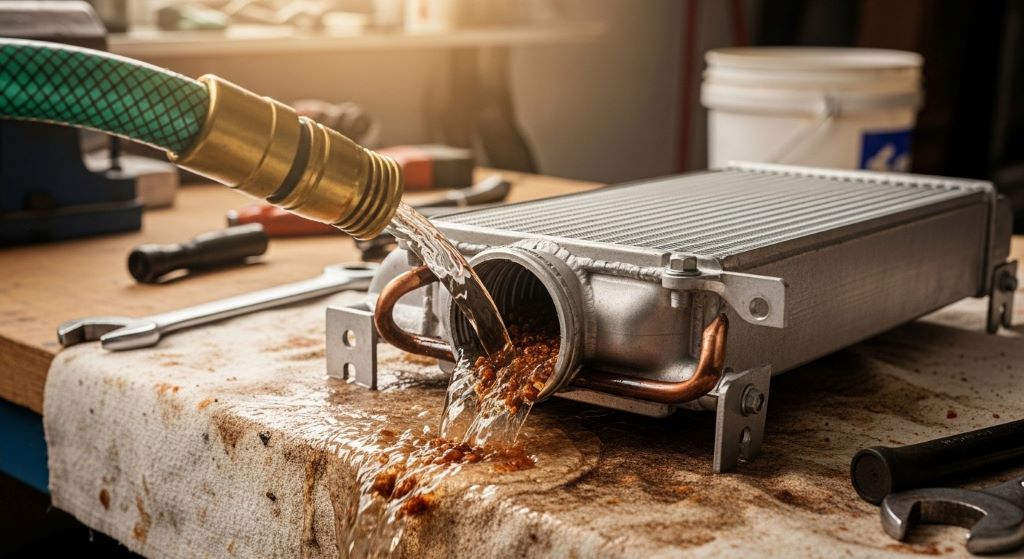
Connect a garden hose to the heater core inlet using appropriate adapters. Apply gentle water pressure and observe flow from the outlet. Strong, steady flow indicates clear passages.
Weak or absent flow confirms blockage inside the heater core. Additionally, note whether water exits dirty or contains sediment. Contaminated discharge suggests debris accumulation within the core.
Reverse the water flow direction for thorough testing. Connect the hose to the outlet and observe inlet discharge. Blockages sometimes affect only one flow direction initially.
Compressed air testing provides alternative flow verification. Apply low-pressure air through core passages while listening for restrictions. However, avoid excessive pressure that might damage delicate core tubes.
Attempting Heater Core Flushing
Flushing removes minor blockages and sediment without core removal. This procedure saves significant labor costs compared to replacement. However, heavily blocked cores may require professional service or replacement.
Chemical flush products dissolve rust, scale, and deposits inside cooling systems. Products like CLR or dedicated radiator flush cleaners work effectively. Follow manufacturer instructions for proper dilution and application time.
Reverse flushing removes stubborn blockages more effectively than normal flow direction. Connect a flushing tool to the outlet hose and pump cleaning solution backward through the core. This dislodges debris that settled in passages.
Multiple flush cycles improve cleaning effectiveness. Flush until discharge water runs completely clear without sediment. Additionally, allow sufficient dwell time for chemicals to dissolve accumulated deposits.
Garden hose flushing provides basic cleaning without chemicals. Connect the hose to the heater core and flush thoroughly with fresh water. This removes loose debris but may not dissolve hardened deposits.
Professional flushing equipment generates higher pressure and uses specialized chemicals. Shops can perform reverse-pressure flushing that reaches stubborn blockages. Therefore, consider professional service for severely restricted cores.
Checking Thermostat and Cooling System Function
Thermostat problems mimic heater core blockages by preventing hot coolant circulation. A stuck closed thermostat blocks all coolant flow, eliminating cabin heat. Additionally, stuck open thermostats prevent engines from reaching proper operating temperature.
Test thermostat operation by monitoring engine temperature during warmup. The engine should reach normal temperature within 5-10 minutes. Prolonged warmup times suggest a stuck open thermostat.
Feel the upper radiator hose during warmup to verify thermostat opening. The hose should suddenly become hot when the thermostat opens. This typically occurs around 195 degrees Fahrenheit on most vehicles.
Cooling system air pockets prevent proper coolant circulation to the heater core. Air trapped in the system creates flow restrictions and inconsistent heating. Therefore, proper bleeding eliminates air-related heating problems.
Bleed cooling systems by running the engine with the radiator cap removed. Squeeze the radiator hoses to help air escape while adding coolant as needed. Some vehicles require specific bleeding procedures outlined in service manuals.
According to Car and Driver, air pockets commonly develop after coolant changes or repairs, creating heating problems that resolve once properly bled.
Inspecting for External Hose Restrictions
Heater hoses develop internal deterioration that restricts flow without visible external damage. Collapsed hose liners create blockages while the outer hose appears normal. Additionally, kinked or pinched hoses restrict coolant movement.
Squeeze heater hoses along their entire length checking for soft spots or internal collapse. Healthy hoses feel firm and spring back when released. Deteriorated hoses feel mushy or remain compressed.
Remove suspect hoses and inspect internal surfaces carefully. Swollen or delaminated inner liners indicate replacement necessity. Moreover, hoses older than five years should be replaced preventively during heater service.
Check hose routing for sharp bends or contact points causing restrictions. Hoses should follow smooth curves without severe angles. Reroute hoses that contact sharp edges or moving components.
Verify proper hose clamp installation and tightness. Loose clamps allow air infiltration that creates flow problems. However, overtightened clamps can collapse hoses and restrict flow.
Evaluating Water Pump Performance
Water pump problems reduce coolant circulation throughout the entire cooling system. Weak pump output decreases heater core performance even without blockages. Therefore, verifying pump function completes comprehensive troubleshooting.
Listen for unusual noises from the water pump area during engine operation. Grinding, squealing, or rattling sounds indicate bearing failure. Additionally, coolant leaks around the pump shaft suggest seal deterioration.
Check water pump belt tension and condition on serpentine belt systems. Loose belts slip and reduce pump speed, decreasing circulation. Replace glazed, cracked, or frayed belts immediately.
Observe coolant movement in the radiator with the cap removed and engine running. Strong circulation creates visible flow and turbulence. Weak or absent movement suggests pump failure.
Feel for excessive water pump shaft play by wiggling the pulley. Significant movement indicates worn bearings requiring pump replacement. Properly functioning pumps show minimal shaft movement.
Deciding Between Repair and Replacement
Heavily blocked heater cores sometimes resist flushing attempts and require replacement. Cost comparisons help determine the most economical solution. Labor expenses often exceed parts costs for heater core replacement.
Dashboard removal complexity varies significantly between vehicle models. Some cars allow core access through simple panel removal. Others require complete dashboard disassembly taking 8-10 hours of labor.
Aftermarket heater cores cost between 50 and 200 dollars for most vehicles. Original equipment cores run 150 to 400 dollars. However, labor costs typically range from 500 to 1000 dollars.
Consider vehicle age and value when deciding repair strategies. Older vehicles with marginal value may justify continued flushing attempts. Newer vehicles warrant proper core replacement for reliable long-term performance.
Leaking heater cores require immediate replacement regardless of blockage status. Flushing cannot repair physical damage or corrosion holes. Therefore, coolant odors or visible leaks mandate core replacement.
Conclusion
Troubleshooting heater core flow blockages requires systematic diagnosis starting with simple checks. Verify coolant level and condition, test heater hose temperatures, and inspect control valve operation before assuming core failure. Flushing often resolves minor blockages economically, while severely restricted cores need replacement. Additionally, eliminate thermostat problems, air pockets, and hose restrictions during diagnosis. Therefore, methodical testing identifies root causes accurately and prevents unnecessary repairs. Proper troubleshooting restores heating performance while minimizing expense and downtime.
Frequently Asked Questions
How can I tell if my heater core is clogged or just the control valve is stuck?
Test heater hose temperatures at the firewall with the engine hot and heat on maximum. If both hoses feel cool, the control valve likely blocks flow. If the inlet hose is hot but the outlet is cool, the heater core itself is probably clogged.
Can I flush a heater core without removing it from the vehicle?
Yes, disconnect both heater hoses at the firewall and use a garden hose or flushing tool to clean the core in place. Reverse flushing works most effectively by pushing debris backward through the core. Multiple flush cycles improve results significantly.
What causes heater cores to become blocked?
Rust and corrosion from old coolant, sediment accumulation from improper maintenance, and stop-leak products solidifying inside passages cause most blockages. Additionally, mixing incompatible coolant types creates chemical reactions that form deposits. Regular coolant changes prevent most blockage problems.
How long does flushing a blocked heater core take?
Simple flushing takes 30-60 minutes including coolant drainage and refilling. However, stubborn blockages may require multiple chemical treatments over several hours. Professional reverse-pressure flushing typically completes within one hour with specialized equipment.
Is it safe to drive with a blocked heater core?
Yes, blocked heater cores don’t affect vehicle safety or drivability in most cases. However, you’ll lack cabin heat during cold weather. If blockages create cooling system pressure problems causing overheating, continued driving risks engine damage requiring immediate attention.
Related Topics:
How to Fix Van Roof Leaks Permanently: A Step-by-Step Guide
Why Car Air Conditioning Smells Like Vinegar: Causes and Fixes