Key Takeaways
- Roughly one in three American drivers cannot cover an unexpected repair without debt.
- The five most common car repair issues involve sensors, brakes, batteries, and fluids.
- Labor rates now average over $100 per hour, so diagnosis accuracy matters greatly.
- Simple maintenance tasks prevent the majority of expensive breakdowns each year.
- A second opinion on any big quote often cuts the final bill dramatically.
Every driver eventually faces a warning light or a strange noise. That moment brings stress, confusion, and often a big bill. However, knowledge changes the experience completely. This guide breaks down the most common car repair problems, their real costs, and the habits that prevent them. Read on before your next garage visit, and you will spend smarter.
Why Car Repair Knowledge Saves Real Money
Surprises hurt wallets most. AAA research shows that one in three American drivers cannot pay for an unexpected repair without borrowing money. That statistic explains why panic leads to poor decisions at the service counter. Additionally, AAA found that 64 million drivers skipped or delayed needed repairs due to cost concerns. Deferring small fixes then creates larger failures later.
The industry itself adds pressure. The Bureau of Labor Statistics reports that skilled technician wages keep climbing, so labor rates now exceed $100 per hour in many cities. Therefore, every wasted diagnostic hour costs you real money. Understanding basic symptoms helps you describe problems clearly. Clear descriptions shorten diagnosis time and shrink invoices.
Knowledge also protects against unnecessary work. The Car Care Council inspected thousands of vehicles and found that roughly 80 percent needed maintenance or a replaced part. Some of those needs were genuine, yet upselling remains common at some shops. A driver who knows the difference between urgent and optional work keeps control. Control turns repair visits from gambles into manageable transactions.
The Most Common Car Repair Problems
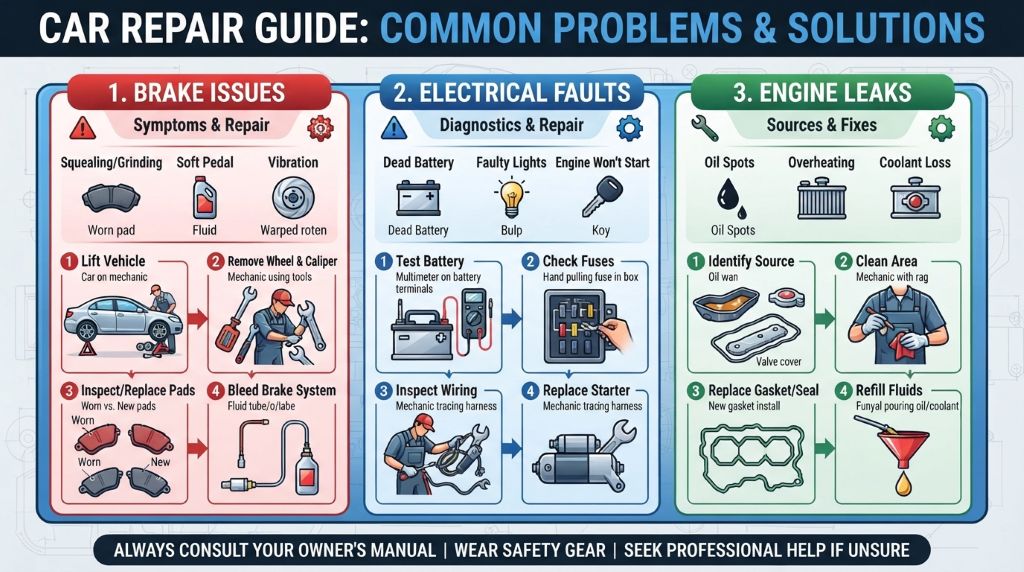
Certain failures appear again and again across millions of vehicles. The annual CarMD Vehicle Health Index tracks check engine light data nationwide, and its findings repeat yearly. Oxygen sensor failures, catalytic converter damage, and ignition coil problems dominate the list. Here are the issues most drivers will eventually face:
- Dead batteries and corroded terminals, especially after three to five years of service.
- Worn brake pads and rotors, which squeal or grind as they deteriorate.
- Leaking coolant, oil, or transmission fluid that leaves puddles under the car.
- Faulty oxygen sensors that hurt fuel economy and trigger dashboard warnings.
- Failed alternators that dim lights and slowly drain a healthy battery.
- Clogged fuel systems and dirty air filters that cause rough idling.
- Suspension wear, shown by clunks over bumps and uneven tire wear.
Small problems rarely stay small. For example, a $15 radiator hose that bursts on the highway can overheat the engine within minutes. Overheating then warps the head gasket, which turns a minor fix into a $2,000 engine job. Therefore, treat every drip, squeal, and warning light as early information. Early information is always cheaper than late consequences.
What Car Repair Really Costs Today
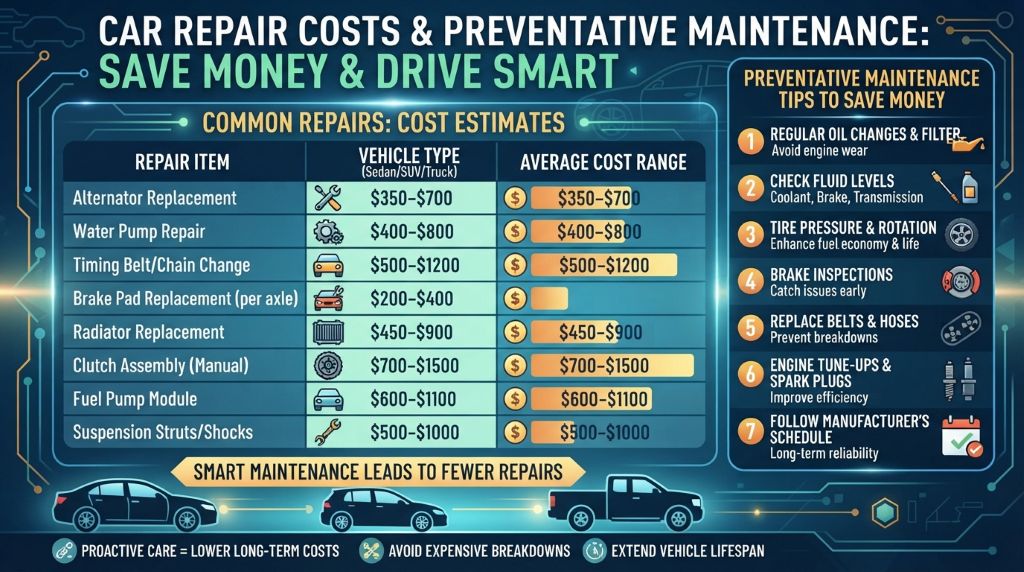
Prices vary by region and vehicle brand, yet reliable ranges exist. RepairPal data gives realistic averages for common jobs on mainstream vehicles. Use these figures as reference points when a shop hands you an estimate:
- Battery replacement: $100 to $250, including the part and installation.
- Brake pads per axle: $150 to $300, while rotors push the total near $500.
- Oxygen sensor: $250 to $400 depending on engine access.
- Alternator: $400 to $600 with labor included.
- Catalytic converter: $1,300 to $2,500 because of precious metal content.
- Timing belt: $500 to $1,000, sometimes more on crowded engine bays.
Luxury and European brands often double these figures. Additionally, dealer service departments charge more than independent shops for identical work. A Consumer Reports survey of thousands of drivers found independent shops generally scored higher on both price and satisfaction. Therefore, compare at least two estimates before approving any major job. Ask for the estimate in writing, and request your old parts back afterward. Those two habits alone stop many inflated bills.
DIY Repairs Versus Professional Help
Some jobs suit beginners, while others demand professional tools and training. Honest self-assessment prevents disaster. These tasks are safe starting points for most owners:
- Replacing wiper blades, air filters, and cabin filters in minutes.
- Swapping a battery after disconnecting the negative terminal first.
- Checking and topping off oil, coolant, brake fluid, and washer fluid.
- Changing spark plugs on engines with easy access.
- Rotating tires with a jack, stands, and a torque wrench.
Complex work carries serious risk. Brake systems, timing belts, airbag circuits, and transmission repairs require precision and special equipment. A mistake in these areas threatens safety and multiplies costs. My neighbor learned this the hard way with a brake job in his driveway. He pinched a brake line during reassembly, and the pedal sank at a stop sign. The professional repair afterward cost triple the original shop quote. Therefore, match the task to your skill level, and never gamble with braking systems. Buying the right tools also adds up, so calculate whether one job justifies the investment.
Preventive Maintenance: The Cheapest Repair Strategy
Maintenance beats repair every single time. AAA’s studies show that drivers who follow service schedules face far fewer roadside emergencies. The logic is simple. Fluids, belts, and filters wear at predictable rates, so scheduled replacement removes surprise from the equation. Follow this baseline schedule and adjust for your driving conditions:
- Change engine oil every 5,000 to 7,500 miles, or as your manual states.
- Rotate tires every 5,000 to 8,000 miles for even tread wear.
- Replace engine air filters roughly every 15,000 to 30,000 miles.
- Flush brake fluid every two to three years, since it absorbs moisture.
- Inspect belts, hoses, and battery terminals twice each year.
- Replace coolant on the interval listed in the owner’s manual.
Severe driving changes everything. Short trips, extreme heat, dusty roads, and heavy towing all shorten service intervals. My own lesson came from a neglected coolant change years ago. The old fluid corroded a water pump seal, and the failure stranded my family on a summer trip. The tow plus repair cost nine times more than the maintenance ever would. That single bill converted me into a schedule follower permanently. Calendar reminders and a small logbook keep the habit alive without effort.
How to Choose a Trustworthy Repair Shop
The right shop becomes a long-term partner, so choose carefully. Start with certifications. Look for technicians certified by the National Institute for Automotive Service Excellence, known as ASE. Certification proves tested competence, though it does not guarantee honesty. Therefore, read recent reviews across several platforms and ask neighbors for their experiences.
Visit the shop before you need it. A good facility looks organized, explains findings clearly, and shows you the worn parts on request. Additionally, trustworthy shops provide written estimates and call before adding work. Watch for these warning signs during any visit:
- Pressure to approve repairs immediately without explanation.
- Vague invoices that list parts without labor hours.
- Refusal to return replaced parts or show diagnostic evidence.
- Quotes far below competitors, which often signal bait tactics.
Get a second opinion on any job above $500. Reputable shops expect this and rarely object. When my father received a $1,800 quote for suspension work, a second shop found the real issue. The actual fix cost $300 and took an hour. That comparison saved $1,500 and built lasting trust with the smaller shop. Loyalty follows fairness, and fair shops earn decades of repeat business.
Frequently Asked Questions
How often should a car get routine service?
Follow the owner’s manual intervals for oil, filters, and fluids. Most modern vehicles need basic service every 5,000 to 7,500 miles.
Is it cheaper to repair or replace an old car?
Compare the repair cost against the car’s current value. Repairs exceeding half the vehicle’s value usually justify replacement.
Why does dealer service cost more than independent shops?
Dealers carry higher overhead and factory training costs. Independent certified shops often deliver equal quality at lower labor rates.
Can I drive with the check engine light on?
A steady light means schedule service soon. A flashing light signals active engine damage, so stop driving and get help immediately.
What maintenance can I safely do myself?
Filters, wipers, batteries, fluid checks, and tire rotations suit beginners. Leave brakes, timing components, and electrical systems to professionals.
Final Thoughts
Car repair does not need to feel like a financial ambush. Learn the common failures, know fair price ranges, and follow a steady maintenance schedule. For example, knowing how to handle a burning smell from your car after engine overheating can help you respond safely before a minor issue becomes a costly repair. Choose a certified shop that explains its work and proves its findings. These habits turn unexpected breakdowns into rare events instead of routine disasters. The cheapest repair will always be the one that never happens.
Now share your story. Have you ever dodged a huge repair bill through a second opinion or basic maintenance? Drop your experience in the comments below, because your lesson could save another driver real money. Additionally, share this guide with anyone tired of mysterious repair invoices.