A clean garage is more than just nice to look at. It is a safer, more functional space where you can actually get work done. However, garages collect dust, debris, and grime faster than almost any other part of the home. Between tools, vehicles, and foot traffic, keeping things clean takes real effort.
The good news is that the right vacuum tools make the job much easier. Whether you are doing a full seasonal clean-out or a quick tidy-up after a project, knowing how to use your equipment properly saves time and delivers better results. This guide covers everything you need to know to clean your garage efficiently and keep it that way.
Why Your Garage Needs a Dedicated Cleaning Routine
Most people clean their garage once or twice a year — if that. That approach leads to heavy buildup that becomes hard to manage. Dust settles into corners, oil stains develop on the floor, and debris gets tracked in from outside every single day.
A regular routine changes all of this. Even a quick vacuum session once a week prevents the kind of deep buildup that turns a simple task into a half-day project. Additionally, keeping your garage clean reduces allergens, protects your stored items, and extends the life of your tools and equipment.
The key is using the right tools for the job. Standard household vacuums are not built for garage environments. They clog easily, lack the suction power needed for heavy debris, and are not designed to handle wet messes or fine particles like sawdust.
Choosing the Right Vacuum for Your Garage
Before you start cleaning, you need the right machine. Not all vacuums are created equal, and the garage demands more than most.
Wet/Dry Shop Vacuums
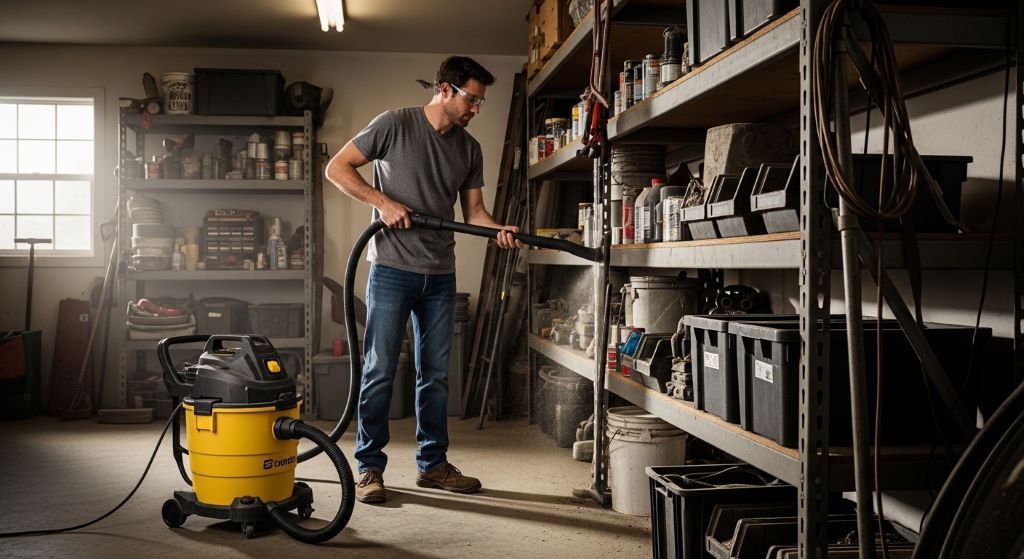
A wet/dry shop vacuum is the gold standard for garage cleaning. These machines handle both dry debris and liquid spills without missing a beat. They come in a range of sizes, from compact five-gallon models to large sixteen-gallon units built for heavy-duty use.
When choosing a shop vacuum, pay attention to the motor power, measured in horsepower or peak amps. Higher numbers mean stronger suction, which matters when dealing with sawdust, gravel, or large debris. Tank size is important too. A bigger tank means fewer trips to empty, but also a heavier machine to carry around.
Handheld and Cordless Vacuums
For quick cleanups and tight spaces, a cordless handheld vacuum is a useful companion. These are not replacements for a full-size shop vac, but they are excellent for dusting shelves, cleaning out tool drawers, and getting into areas where a large hose cannot reach.
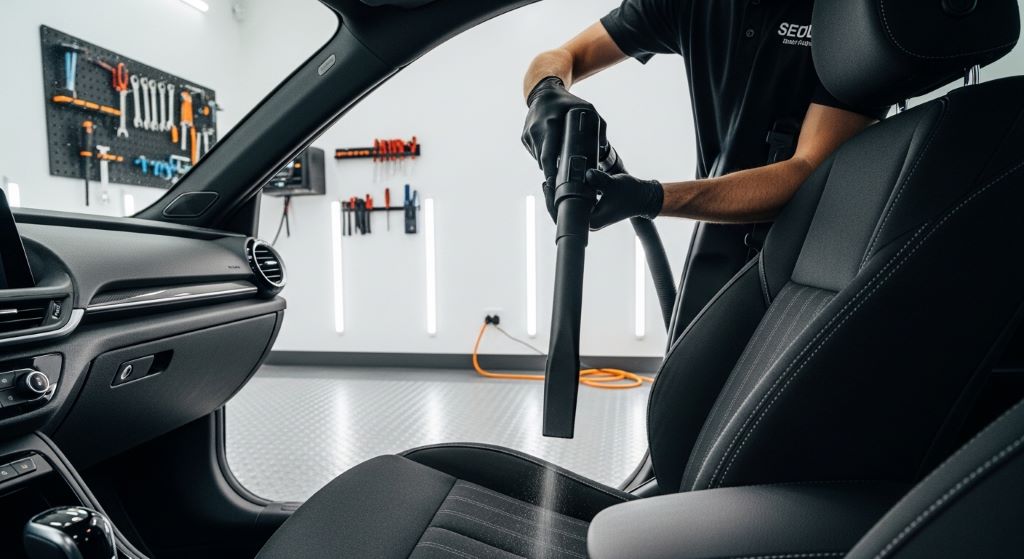
Additionally, if you use your garage for vehicle maintenance, a quality car detailing vacuum belongs in your arsenal. These compact, high-suction tools are designed specifically for interiors — seats, floor mats, vents, and tight gaps. They transition naturally from inside the car to the garage workspace itself.
Essential Vacuum Attachments and What They Do
The machine matters, but so do the attachments. Most shop vacuums come with a basic set, but knowing what each one does helps you work smarter.
- Crevice tool: A narrow, angled nozzle designed for tight spaces. Use it along baseboards, between shelves, and around workbenches.
- Brush attachment: A wide nozzle with soft bristles. Ideal for dusting surfaces without scratching them, such as tool cabinets and garage walls.
- Floor nozzle: A wide, flat attachment made for sweeping large areas quickly. Use this for the main garage floor.
- Utility nozzle: A versatile attachment for general-purpose vacuuming. Works well on rough surfaces and uneven terrain.
- Flexible hose extension: Extends your reach so you can vacuum high shelves, ceiling corners, and overhead storage without a ladder.
Investing in a set of quality garage dust tools pays off immediately. The right attachment gets the job done in one pass instead of three.
A Step-by-Step Approach to Garage Vacuuming
Having a system makes the whole process faster. Instead of vacuuming randomly, work from top to bottom and from the back of the garage to the front. This way, dust and debris fall downward and forward — right into your path.
Step 1: Clear the Space
Start by moving items off the floor where possible. This gives you unobstructed access and makes the vacuuming much more effective. Even sliding things to one side temporarily helps.
Step 2: Dust High Surfaces First
Use your brush attachment or a duster to sweep down ceiling corners, light fixtures, and high shelves. Dust and cobwebs will fall to the floor. Do not worry about them yet — you will vacuum them up in the next steps.
Step 3: Vacuum Shelves, Workbenches, and Cabinets
Work your way down from the highest surfaces. Use the brush attachment for flat surfaces and the crevice tool for corners and gaps. Take your time in areas where tools and equipment sit, as debris tends to collect there.
Step 4: Address the Walls and Baseboards
Garage walls accumulate more dust than people realize. Run the brush attachment along the walls and use the crevice tool at the base where the wall meets the floor. This step is easy to skip, but it makes a noticeable difference over time.
Step 5: Vacuum the Floor
This is the biggest surface and often the dirtiest. Use the floor nozzle and work in slow, overlapping passes. Pay extra attention to corners and the area around the garage door, where debris tends to pile up.
For stubborn dirt or grit, a second pass often works better than pressing harder on the first. Additionally, if your garage floor has cracks or expansion joints, use the crevice tool to pull debris out of those gaps before switching to the floor nozzle.
Step 6: Handle Spills and Wet Messes
If your garage has any liquid spills — oil, water, or chemical runoff — switch to wet mode on your shop vac. Make sure the filter is removed or swapped for a wet-compatible one before you start. Most shop vacuums include instructions for this in the manual.
After vacuuming up the liquid, follow with an absorbent material if needed and then vacuum the residue once dry.
Cleaning Vehicle Interiors in the Garage
Many men use their garage as a workspace for vehicle maintenance and detailing. It makes sense, therefore, to handle car cleaning in the same session as garage cleaning.
A car detailing vacuum is purpose-built for this task. Its slim profile and strong suction reach under seats, between cushions, and into dashboard vents with ease. Start with the trunk, then move to the back seats, and finish with the front. Vacuum floor mats separately outside the vehicle for best results.
After finishing the interior, you can continue with the rest of your garage routine. The transition is seamless, and you save time by having everything set up already.
Maintaining Your Vacuum for Long-Term Performance
Even the best vacuum loses performance when it is not maintained. A clogged filter is the most common cause of reduced suction. Check and clean the filter after every few uses, and replace it according to the manufacturer’s schedule.
Empty the tank before it gets completely full. A tank that is too full puts strain on the motor and reduces suction efficiency. Additionally, inspect the hose and attachments regularly for cracks or blockages. A small crack in the hose can dramatically reduce the vacuum’s effectiveness.
Store your vacuum in a dry location. Garage humidity can affect motors and internal components over time. Keeping it off the floor on a shelf or hook also protects the hose and power cord from accidental damage.
Extra Tips for a Cleaner Garage
A few simple habits keep the garage cleaner between deep sessions.
- Place a heavy-duty mat at the garage entrance to catch dirt and debris before it spreads.
- Sweep the floor once a week with a push broom before vacuuming. This moves large debris into piles that are easier to pick up.
- Store items in sealed bins rather than open shelves to reduce surface dust.
- Use a leaf blower to blow dust out of corners and hard-to-reach areas before vacuuming. This works especially well for garages with high ceilings and overhead storage.
- Label your storage areas so tools and equipment are returned to the right spot, reducing clutter and making future cleans easier.
These small steps add up. Combined with the right garage dust tools and a consistent routine, your garage can stay clean with much less effort than you might expect.
Conclusion
A clean garage starts with the right tools and a smart approach. Shop vacuums are the most versatile choice for handling everything from fine dust to wet spills. The right attachments — crevice tools, brush heads, and floor nozzles — help you reach every corner without wasted effort.
Working from top to bottom and following a consistent order makes each session faster and more thorough. For vehicle owners, adding a car detailing vacuum to your toolkit ensures the inside of your car gets the same level of attention as the floor and shelves.
Regular maintenance of your vacuum keeps it performing at its best. And simple daily habits go a long way in keeping things tidy between deep cleans. With the right system in place, a clean and functional garage is well within reach.
Frequently Asked Questions
What type of vacuum works best for garage cleaning?
A wet/dry shop vacuum is the best all-around choice. It handles dry debris, fine dust, and liquid spills. It is powerful, durable, and comes with attachments for different surfaces and spaces.
Can I use a regular household vacuum in my garage?
It is not recommended. Household vacuums are not built for the heavy debris, fine particles, and potential wet messes found in garages. They can clog quickly, and the motor may overheat, shortening the vacuum’s lifespan.
How often should I vacuum my garage?
A light vacuum once a week or every two weeks works well for most garages. A deeper clean — including walls, shelves, and corners — should be done at least once every season.
What is the best way to vacuum fine sawdust in a garage?
Use a shop vacuum with a fine dust filter or a HEPA filter. Standard filters allow fine particles to pass through and recirculate into the air. A proper filter captures them and keeps your workspace safe.
Are car detailing vacuums useful for garage cleaning too?
Yes. While designed for vehicle interiors, car detailing vacuums are also great for cleaning tight spaces in the garage, such as tool drawers, small shelves, and workbench corners where a larger vacuum cannot reach.
Related Topics:
Metal Garage Maintenance: A Yearly Checklist for Longevity